Case study
The Endless Journey
A narrative survival game exploring migration, emotional survival, and environmental storytelling through interaction design

- Role
- Solo Designer & Developer
- Timeline
- September – December 2025
- Platform
- PC desktop game
- Team
- Solo student project · INTD-300 / INTD-310, Emily Carr University
- Tools
- Unity 6.2HDRPCinemachineTimelineC#Unity UI Toolkit
Overview
The Endless Journey is a narrative survival game exploring how digital environments and gameplay systems can communicate emotional experiences of migration, uncertainty, and adaptation.
The game follows a young Syrian refugee girl who loses consciousness while escaping across a border and awakens in an unfamiliar symbolic world. Through environmental exploration, resource gathering, and social interaction, players experience migration not through direct exposition, but through atmosphere, emotional survival systems, and environmental storytelling.
Rather than approaching migration strictly as a political event, the project reframes it as an ongoing human experience connected to movement, fear, survival, and rebuilding throughout history.
This project explores how environmental storytelling and interaction systems within digital game environments can communicate emotional experiences of displacement and uncertainty. The project investigates:
- emotional interaction through gameplay systems
- atmospheric world-building
- symbolic survival mechanics
- environmental storytelling
- player emotional interpretation through interaction
Instead of relying on dialogue-heavy storytelling, the experience focuses on how players emotionally interpret unfamiliar spaces through navigation, atmosphere, and survival systems.
Research & insights
To better understand emotional experiences connected to migration and displacement, I conducted semi-structured interviews with migrants and researched documentaries and articles related to refugee experiences and survival narratives.
Several recurring themes emerged:
- unfamiliar environments create emotional instability
- isolation intensifies uncertainty
- survival is both physical and emotional
- human connection supports emotional recovery
These insights directly shaped the gameplay systems and environmental design.
Research insight → gameplay translation
| Research insight | Gameplay translation |
|---|---|
| Emotional instability after migration | Gradually draining emotional health system |
| Isolation and uncertainty | Sparse environments and distant NPC placement |
| Human connection supports recovery | NPC interactions restore emotional health |
| Fear of unfamiliar environments | Fog-heavy atmospheric world design |
| Continuous movement creates exhaustion | Calorie depletion through exploration |
Narrative structure
The experience is divided into three acts.
Act I, Collapse and Awakening
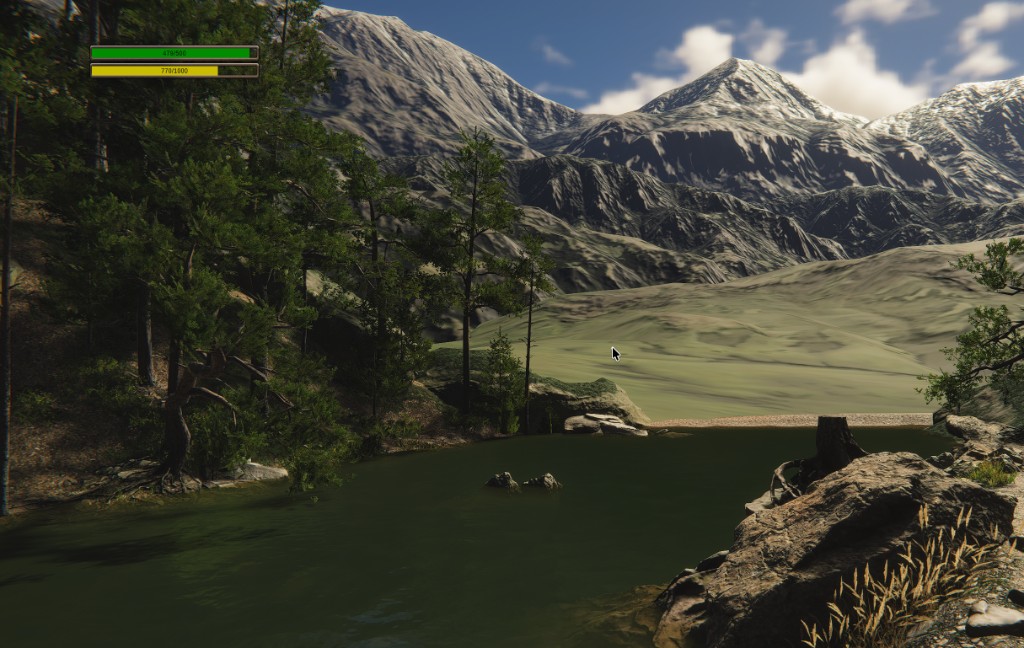
The game begins with a cinematic sequence of a young refugee girl escaping across a border during a stormy night. After collapsing from exhaustion, she awakens in an unfamiliar symbolic landscape inspired by prehistoric migration and survival.
Act II, The Journey
The main gameplay experience focuses on exploration, resource gathering, environmental navigation, and emotional survival. Players move through uncertain environments while searching for stability and human connection.
Act III, Arrival
The final act was planned as a symbolic transition from survival toward rebuilding identity and belonging. Due to time limitations, this section was not fully implemented.
1 / 3
Gameplay systems
Emotional health system
Instead of representing physical injury, the health system represents emotional stability. Isolation and uncertainty gradually decrease the player’s emotional state over time, reframing survival mechanics as emotional systems rather than combat systems.
Calorie system
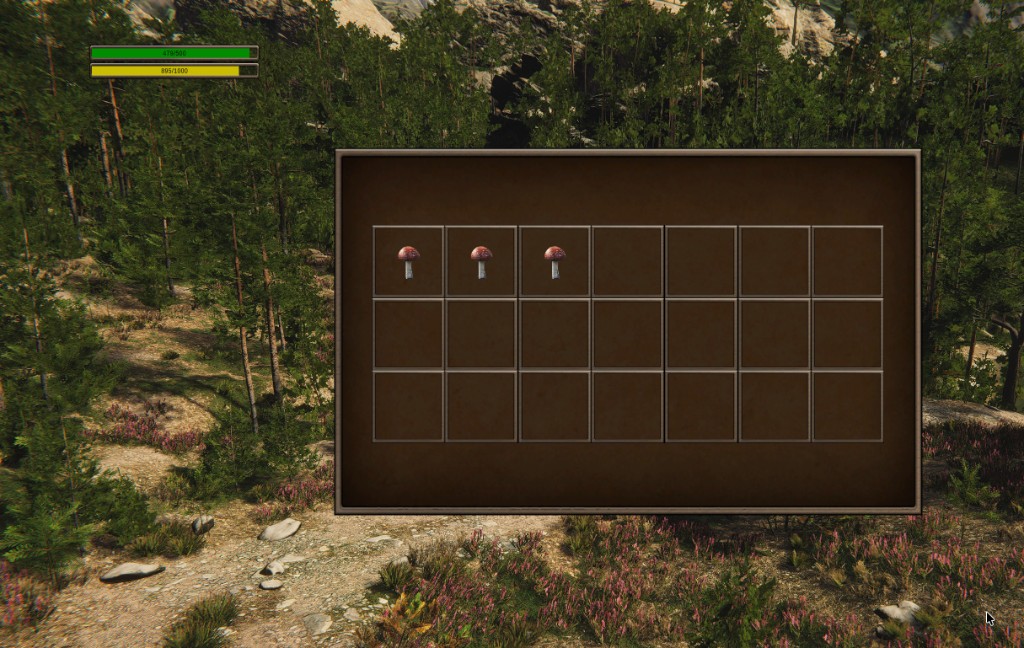
Movement consumes calories, connecting exploration with exhaustion and vulnerability. Players gather mushrooms throughout the environment to restore energy and maintain survival.
NPC interaction system
NPCs function as emotional recovery points within the environment. Interacting with them restores emotional health, symbolizing the importance of belonging and human connection during displacement and adaptation.
Inventory & resource gathering
Players collect mushrooms, wood, and stones while exploring the environment. The inventory system was intentionally designed to remain minimal and unobtrusive to preserve immersion and environmental focus.
1 / 4
Environmental storytelling
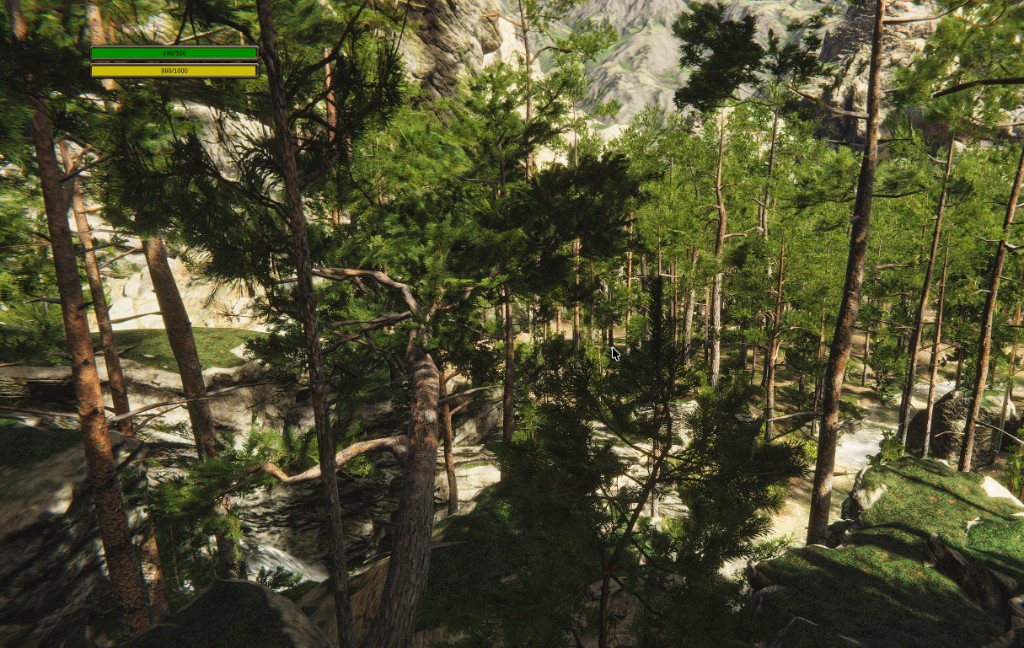
A major focus of the project was investigating how digital environments communicate emotion through atmosphere and spatial design.
The game uses:
- fog to create uncertainty
- dense forests to increase tension
- open fields to create temporary emotional relief
- atmospheric lighting to shape emotional pacing
- distant NPC placement to reinforce loneliness
Rather than relying heavily on exposition, the environment itself becomes part of the narrative system.
1 / 4
Technical development
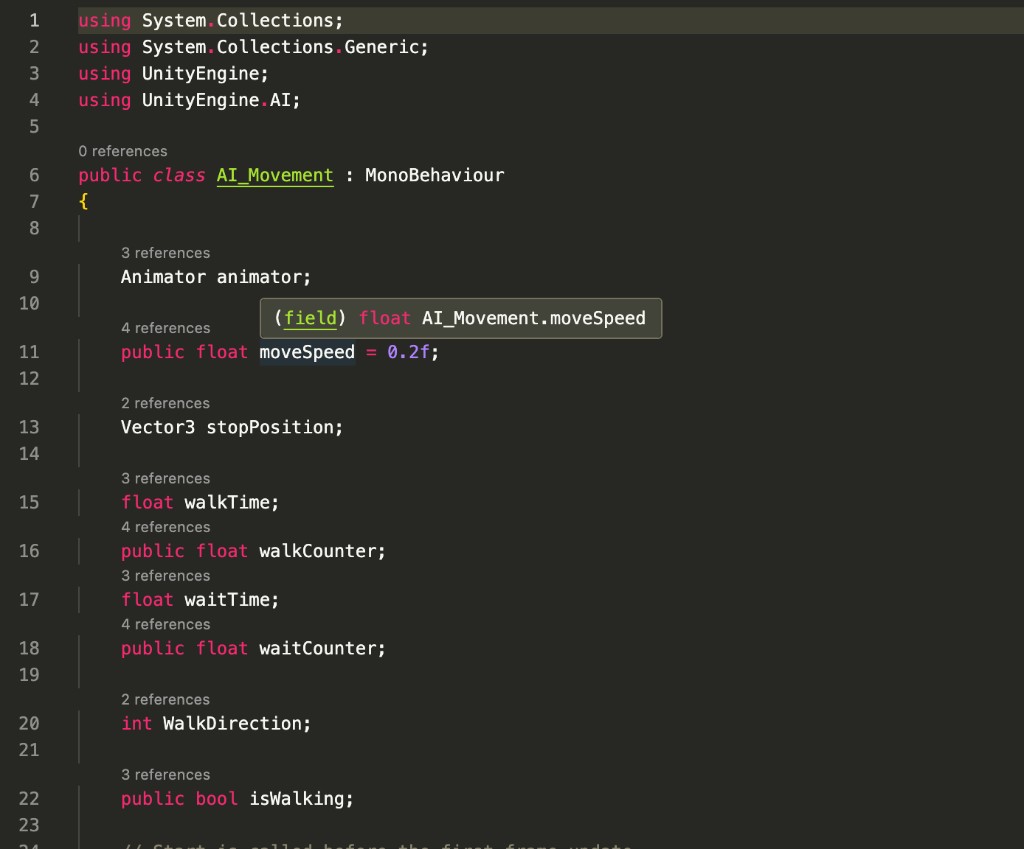
The project was developed in Unity 6.2 using HDRP to create cinematic environmental lighting and atmospheric depth.
Key systems included:
- player controller
- emotional health system
- calorie depletion system
- inventory system
- NPC interaction system
- environmental audio
- UI management system
Cinemachine and Timeline were used to create cinematic transitions, emotional pacing, and unstable camera movement during stressful moments.
1 / 2
Challenges & iteration
Shortly before playtesting, Unity crashed and large portions of the project were lost due to incomplete backups, including scenes, mechanics, and gameplay systems.
Rebuilding the project under significant time pressure became one of the biggest challenges of the development process. Although difficult, the experience strengthened my technical resilience, debugging skills, and ability to prioritize emotional experience over feature quantity.
Reflection
The Endless Journey became one of my first explorations into how digital environments can shape emotional understanding through interaction, atmosphere, and navigation.
Throughout development, I became increasingly interested in:
- emotional interaction design
- environmental storytelling
- player perception
- spatial atmosphere
- narrative game systems
- emotional interpretation of digital spaces
The project taught me that gameplay mechanics can function as emotional communication systems rather than purely mechanical structures.
For example:
- depletion systems can represent emotional exhaustion
- exploration can communicate uncertainty
- environmental openness can create relief
- social interaction systems can represent emotional recovery
While this project was developed as a desktop narrative game, it sparked my interest in how emotional interaction and environmental storytelling could later evolve into more immersive formats such as VR and XR experiences.
Future directions
Future iterations of the project could explore:
- expanded crafting systems
- adaptive emotional systems
- more advanced NPC interaction
- VR environmental immersion
- spatial audio systems
- embodied navigation in immersive environments
The project ultimately became an important step toward my growing interests in immersive interaction design, emotional experience design, and future XR research directions.